Can You Own an Electric Car Without a Driveway or Home Charger?
Plan a week of EV charging without a driveway, compare public costs and check parking, charger availability and installation permissions.
Table of Contents
Yes, if you can charge during a stop you already make and have a fallback you can reach when that charger is busy. Before buying, check two sites at the hours you would use them. A pin on a map tells you where a charger is. Your week tells you whether you can rely on it.
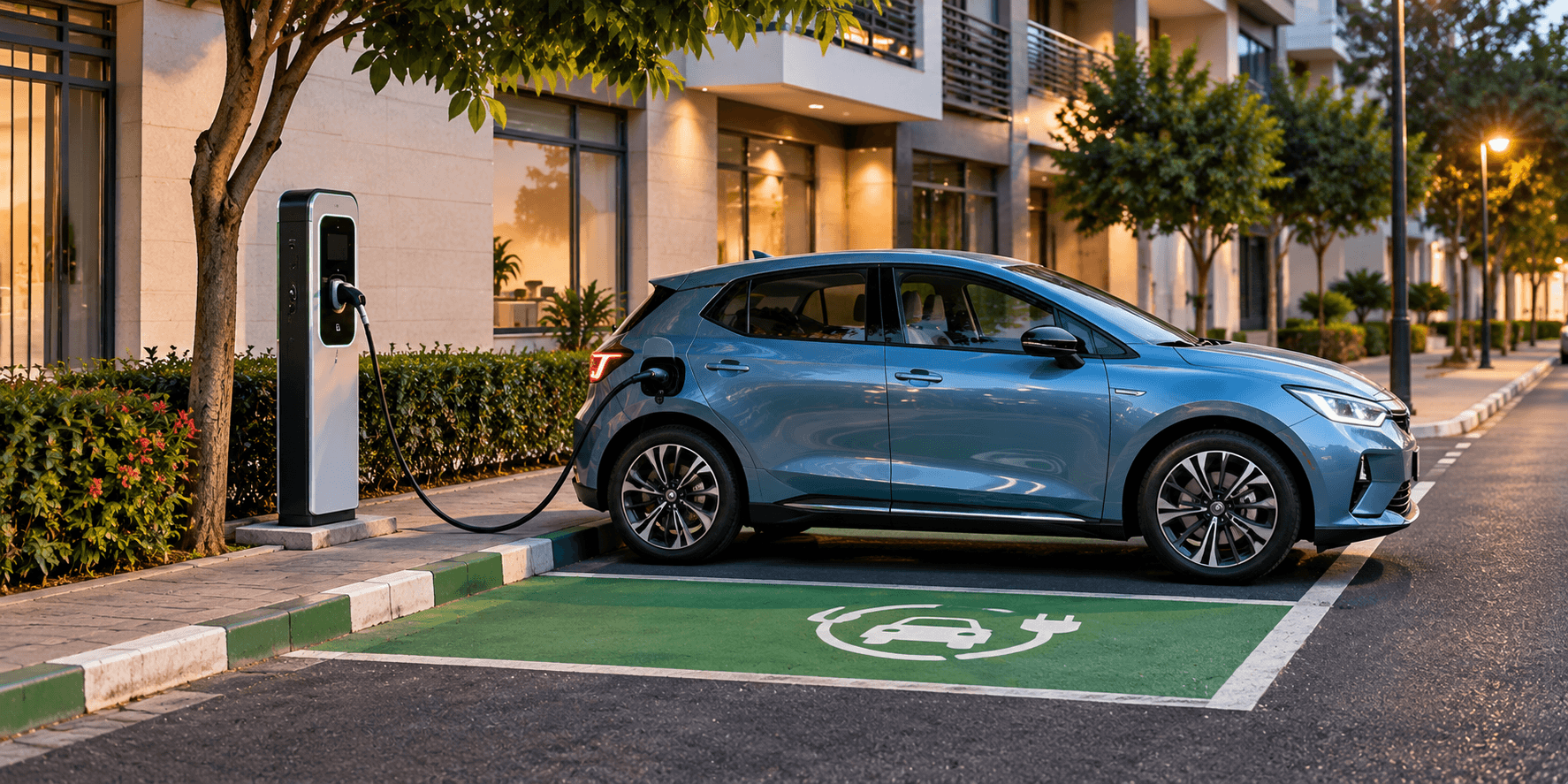
Work out how much charge your week needs
Record a normal week and a busy one. Include commuting, errands, weekend travel and any extra distance to a charger. Multiply weekly distance by billed electricity per mile. If your estimate measures energy used by the car, divide by an assumed charging efficiency to estimate the electricity billed. If you already use a billed figure, skip that adjustment.
Visit your likely sites after work or on the weekend, whenever you would actually charge. Note how many compatible bays are open, whether they are occupied, the price in the payment method you would use, and how long you may stay. Check whether a subscription, parking fee or overstay charge changes the total. Pick a backup at a different site. The operator’s live map is a starting point. On-site signs and host opening hours can affect access. IEA, charging access and deployment
Compare the five ways to charge without a home charger
| Where | Best fit | Price to check | Hours, occupancy and fallback |
|---|---|---|---|
| Shared building | You already park there overnight | Per kWh, building fee and any subscription | Ask how residents share bays and whether overnight use is allowed. Keep a public backup. |
| Workplace | You park for several hours on predictable days | Staff rate and any parking fee | Check staff eligibility, queues, reservations and time limits. Plan for days away from work. |
| On-street | A compatible bay is near home or another regular stop | Unit rate by time band, parking and overstay | Read signs for permit and active-charging rules. Identify another street or site. |
| Destination | You already stop at a shop, gym or station | Host parking, operator rate and session charges | Check gate hours and maximum stay. Estimate how much energy fits the time you spend there. |
| Rapid hub | You need a quick top-up or fallback | Direct, contactless and roaming prices | Check site hours, working bays and connector. Pick a second hub if the first is full or offline. |
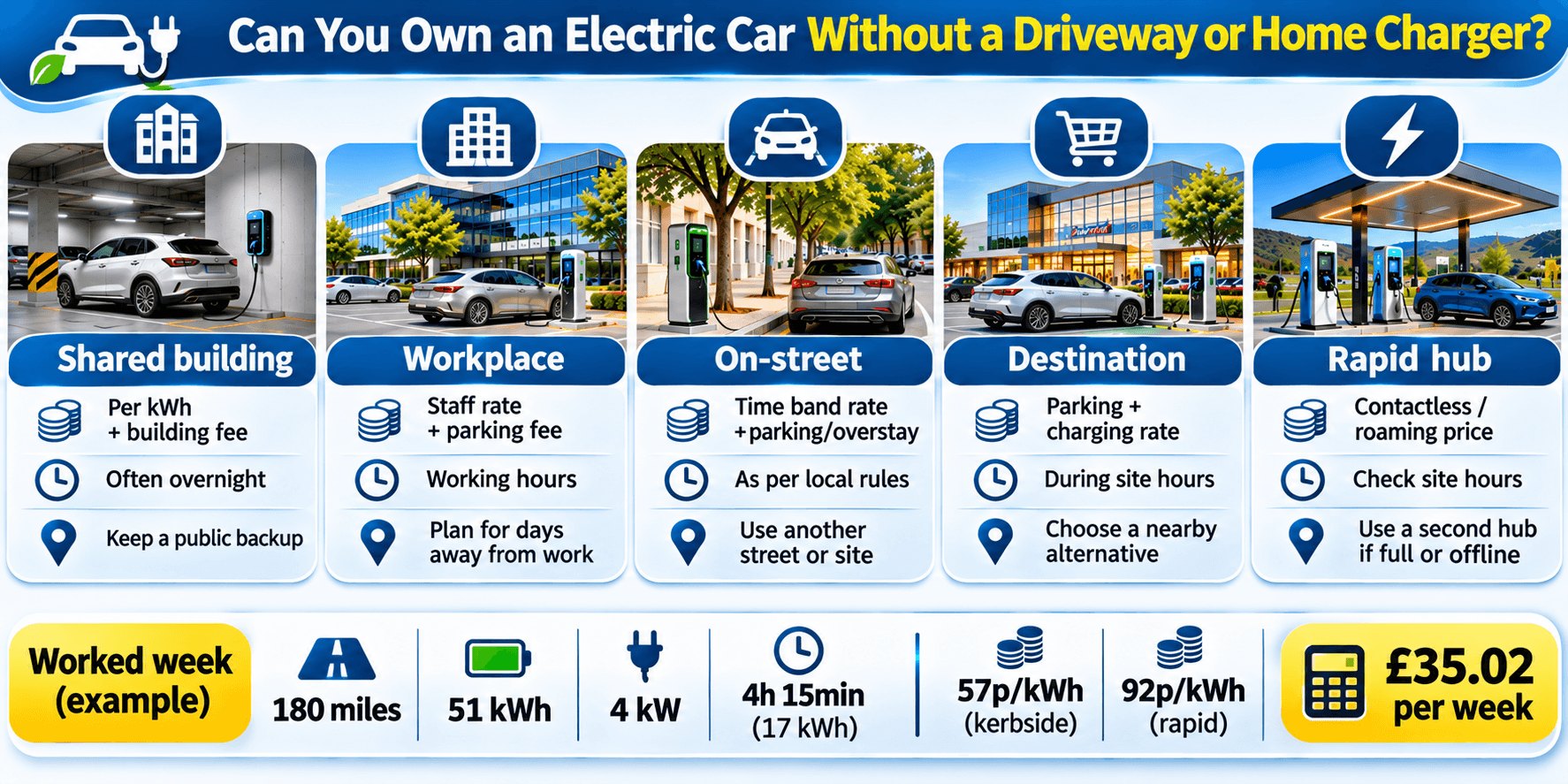
A worked week with street charging and a rapid backup
Take a driver in England who covers 180 miles a week. Assume 0.255 kWh per mile used by the car and 90% charging efficiency, yielding 51 billed kWh. For a real pricing benchmark, ubitricity’s April 2026 notice lists 57p/kWh as the Barnet standard band and warns that individual points may differ. For the rapid leg, use InstaVolt’s 92p/kWh published standard contactless rate, subject to site-specific pricing. Confirm both prices in the relevant app or at the charger. ubitricity pricing notice · InstaVolt pricing terms
| Session | Billed energy | Energy cost |
|---|---|---|
| Tuesday, kerbside | 17 kWh | £9.69 |
| Thursday, kerbside | 17 kWh | £9.69 |
| Weekend, rapid hub | 17 kWh | £15.64 |
| Weekly total | 51 kWh | £35.02 |
At an average billed power of 4 kW, each 17 kWh kerbside session takes about 4 hours 15 minutes. If a sign allows two hours, move that session to a suitable bay or split it. If Tuesday fails, reserve time for another site before you need Thursday’s charge. Pricing all 51 kWh at 92p would bring energy to £46.92, before parking and other fees.
For scale, the same 51 kWh would cost £13.42 at Ofgem’s Great Britain average standard-variable electricity rate of 26.32p/kWh for Direct Debit from 1 October to 31 December 2026. At Octopus’s advertised 6.5p/kWh starting smart rate, it would be about £3.32 if every unit qualified. These home figures cover incremental electricity only. A smart tariff’s compatibility, standing charge and household day rate matter when comparing whole bills. For another country, replace all the rates with local quotes and keep the same calculation. Ofgem, October–December 2026 rates · Intelligent Octopus Go conditions
Ask who controls the parking bay and the cable route
Shared building. Ask the landlord, building manager or owners’ association whether there is a communal project, whether your bay is assigned and who can approve works on common property. Request the proposed installation cost, billing method, access rules and maintenance responsibility in writing. If you rent, check the lease and which written permissions or notifications apply locally.
Cable across a public pavement. Ask the road or highway authority which solutions it accepts at your address, what approvals or work permits apply and who maintains the installation. In England, new permitted development rights took effect on 21 October 2026 for eligible installations. Highway permissions and other conditions can still apply. A channel does not reserve a public parking bay. Get the authority’s answer before buying equipment or routing a cable across public space. Elsewhere, contact the relevant municipality or road authority. Department for Transport, cross-pavement guidance for England
Make the decision before you buy
Run the plan on paper for two ordinary weeks, including one missed session. If your main and backup sites fit your schedule and the fallback price still fits your budget, the car can work without home charging. If the plan depends on one bay always being free, compare a different EV or a full hybrid using the same weekly distance.